
Florentia | Issue 65
Happy Monday and Welcome to the Re-branded Florentia.

Happy Monday and welcome back to Florentia.
If you think things look a little different, you’re right! I changed the name of my blog as I expand my focus to food, health, and the planet.
Florentia is Latin for “blossoming,” a nod to my aim here: to spotlight opportunities and innovations that allow our food, health, and environmental systems to blossom into longevity. In particular, Florentia’s articles will have a focus on topics at the intersection of food and other industries (healthcare, energy, manufacturing, etc).
Florentia’s schedule will be structured in two parts: (1) bi-weekly Monday newsletters with news, perspectives, funding announcements, interviews, and more from around the industry and (2) periodic Sunday deep dives into pressing topics.
I’d love to hear feedback on the change! Shoot me an email or leave a comment.
Now to the action.
Content I’ve Enjoyed the Last Two Weeks 🧬 🌳 🧱
The World is Entering a Dark New Era of Hydroterrorism [Foreign Policy]
Water security is the most important civilizational imperative, for the most part taken for granted. Unstable water access has implications across every industry: food, agriculture, healthcare, energy, you name it. And in the light of recent worldwide climate changes, we’ve seen more and more people lose access to ample water.
Malicious actors are leveraging this phenomena to their advantage. In this piece in Foreign Policy, Abdoulie Ceesay writes about how poor water infrastructure is creating political unrest around the world.
Why this is important: America and it’s allies are not immune from water disturbances: we’ve seen a fair number of over the past year.
Take the American West, which has seen a persistent drought for the past few decades, now exacerbated by new data centers and semiconductor fabs. This chronic lack of water, and unique solutions to solve fix it, is undermining America’s food competitiveness. Take this excerpt from a recent piece by Walt Duflock at Western Growers about Peru’s water infrastructure:
Water - like California and many other agricultural regions, Peru has challenges with groundwater availability for farmers. To help address these challenges, Peru has committed $24B in government funding for surface water storage nationwide (specifically supporting 22 projects). In addition, it has chosen to keep the regulatory burden small for private operators to build water storage on ground they own or lease.
Faced with a similar groundwater challenge, California has made very different decisions. First, the state legislature passed the Sustainable Groundwater Management Act (SGMA) in 2014 which set up quasi-governmental agencies (GSAs - or Groundwater Sustainability Agencies - as defined and created in SGMA’s implementation) to start fallowing agricultural acreage beginning in 2025. The mere creation of the SGMA framework is already causing many growers of permanent crops (including tree crops and vines) to pull the crops out and move to more rotational crops. The rationale is simple – if there is an increasing risk of fallowing from a GSA, it may in many cases make sense to pull the permanent crops out before you are forced to for many reasons – not the least of which is the ability to find buyers for the rotational crops to decide which ones to move toward after pulling permanent crops out.
As we already saw with Peru, you can solve groundwater challenges in many cases by building surface water storage. Groundwater is the underground basins that store water. Surface water is the lakes, rivers, and canals that move it on top of the ground (so now you see why they are named like they are ...) California has been very slow and consistently opposed to making major surface water investments for decades. My grandfather’s generation was involved in the planning and building of Lake Nacimiento (completed in 1957) and Lake San Antonio (completed in 1965) dams, two of the more recent surface water projects (along with the Oroville Dam, completed in 1967) statewide.
That’s a long time without much surface water storage getting built during which many agricultural regions and operators continued to stress the importance of surface water storage. At the same time, private landlords and ag operator water storage projects got increasingly costly with more regulatory burdens due to environmental impact reports and other requirements. The short version is that just like ports, Peru has an advantage around water availability due to their choices to invest in and allow private operators to invest in surface water storage.
And let’s not forget: For the first time in 80 years, Trump denied Mexico’s request for water from Mexico.
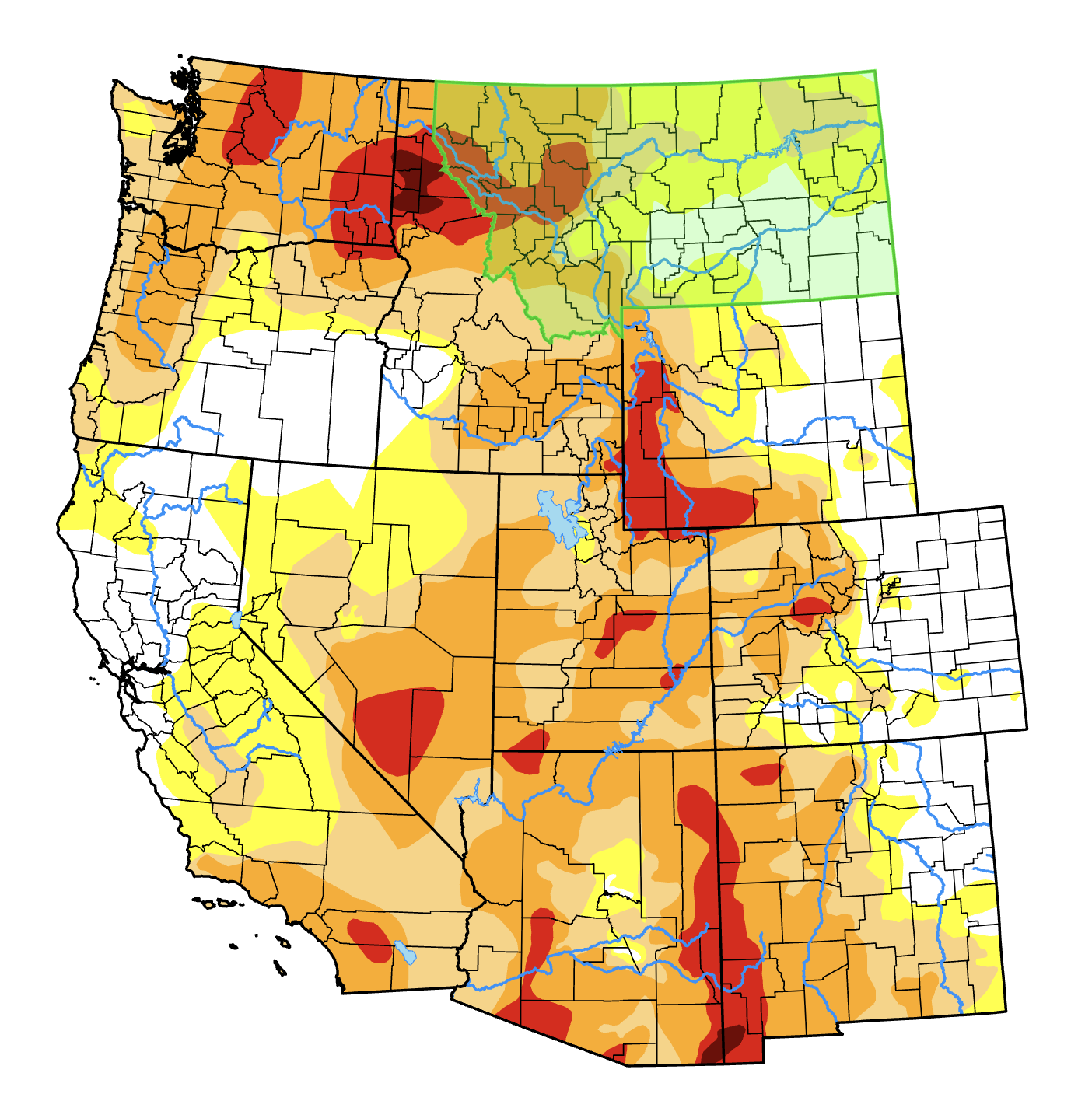
There’s clear demand for unique economic, policy, and technological solutions to solve these water problems. A definitive call to build!
JPMorganChase Launches $1.5 Trillion Security and Resiliency Initiative to Boost Critical Industries [JPMorganChase]
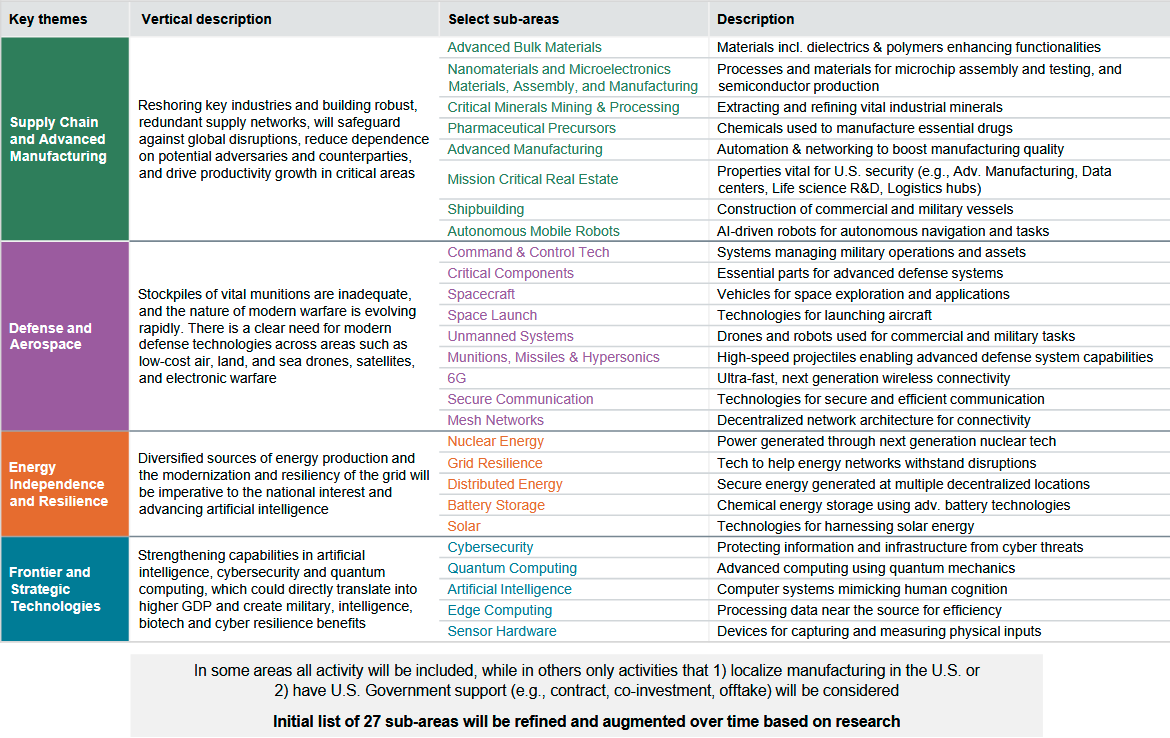
JPMorganChase recently announced a new initiative to invest in areas of critical American importance. A sort of “American Dynamism”, if you will. They plan to deploy $10B over 10 years in areas like supply chain, defense, energy, and frontier technologies.
This follows a macro trend of investing in areas critical to American national security. Our Food & Agriculture system is certainly a part of that: see “A Case for American Dynamism in Agriculture”.
Why this is important: Despite JPMorgan’s subsectors not directly calling out food and agriculture, many of our “traditional” food/ag companies have these as large portions of their business, or are incredibly dependent on them. JPMorgan’s new focus on these spaces is a good reminder to have a renewed focus on this space.
Additionally, many of these resources are likely to end in rural America, given a big focus to bring back the rural manufacturing industry.
Some Interesting Reads (hover for link) 🥗 📦 🦾
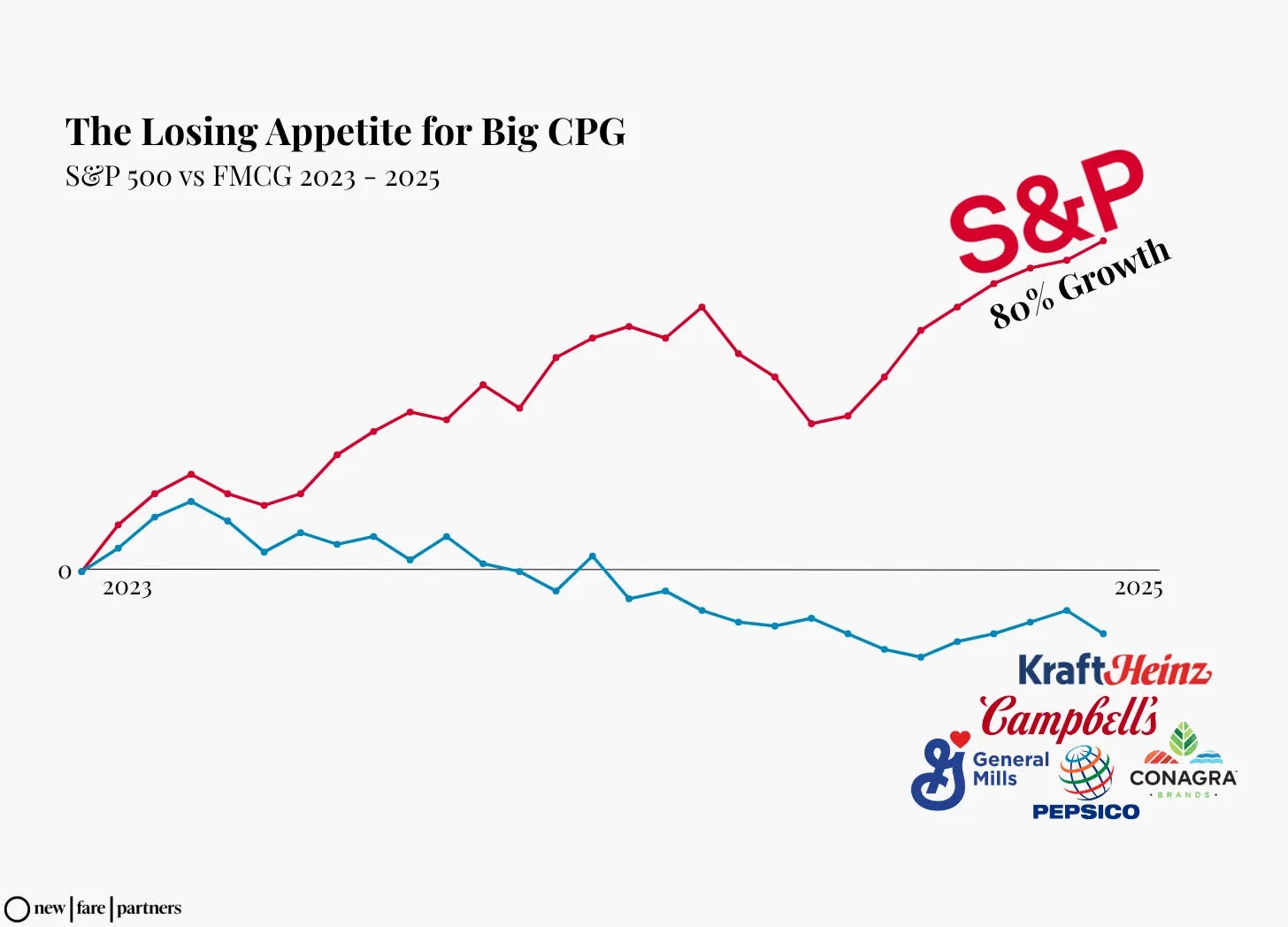
Going Stale: A short but interesting take on the lagging performance of top food companies, in the light of strong stock performance from natural brands. [New Fare Partners]
F Prime Writes on the State of Robotics in 2025: Robotics have made a comeback, as new technology pushes its use cases. Interesting takes and data. [F Prime]
Steak, Butter and Ice Cream, MAHA Sets Up Fight Over Saturated Fat: The US federal government is set to unveil new diet advice likely to embrace saturated fat, alarming some doctors and scientists. [Wall Street Journal]
Trump promised farmers a bailout. Time is running out.: Farmers continue to suffer from the trade war and high input prices. The government promised a bailout, but the future in uncertain. [Politico]
The Amazonification of Whole Foods Is Finally Here—Bring On the Doritos: Amazon is finally starting to bring Whole Foods into its broader grocery strategy; adding mainstream brands, unifying operations, and bringing employees under the Amazon system. Some are concerned the Whole Foods brand will be diluted in the process. [Wall Street Journal]
A Brief Primer on Dollar General’s Distribution Network: A very good look at the distribution network of one of the fastest growing retail stores in the United States. Notably, 80% of its stores are located in towns with less than 20,000 people. [On the Seams]
Trump Strikes Deal to Lower Cost of Weight Loss Drugs: The Trump administration announced a deal they struck with leading pharmaceutical companies to lower the cost of weight loss drugs. Per the article: “Under the deal, the monthly out-of-cost drugs could range from $50 to $350, depending on dosage and insurance coverage.” [CNBC]
Nutrien Weighs Phosphate Unit Sale: Nutrien is considering the sale of their $2.4B phosphate business after a strong quarter to “simplify operations and boost long-term value.” [Mining.com]
Brazil Is Developing a Weapon for Trade Wars: Fertilizer in the Amazon: Brazil is continually creating agriculture independence, especially as they isolate the United States. Fertilizer is their next frontier, per WSJ. [Wall Street Journal]
Finance & Transactions 🏦 💵
Agtonomy bags $18m to bring more AI to ‘the next frontier of automation’: agricultural equipment (10.28.2025)
BiomEdit Secures $2 Million from Bezos Earth Fund to Enhance AI for Methane Reduction in Cattle (11.04.2025)
That’s all for this week! Thanks for reading. Be a friend, tell a friend.
See you in two weeks! 👋
Thanks Corey, excited to (re)introduce Florentia back into the rotation. The contrast between Peru and California's approach was interesting, $24 Billion from Peru's government sounds like a big number for water. Would love to hear more about how JPMC's investment will end up in rural America.